When Not to Use AI in Video Production
I use AI almost every day. Here’s where I’ve learned to keep it out of the room — and why the judgment, trust, and presence are still the whole job.
When Not to Use AI in Video Production
I use AI almost every day. It transcribes my interviews, helps me sort through hours of footage, roughs out captions, and occasionally talks me through a color problem at 1 a.m. when I don’t want to call anyone. I’m not here to tell you it’s bad. I’m here to tell you where I’ve learned to keep it out of the room.
Because the tools have gotten good enough that the question is no longer "can AI do this." It’s "should it." And on a lot of the work I care about most, the answer is no.
When a real person is trusting you with their story
I’ve filmed a 102-year-old Pearl Harbor survivor. I’ve sat across from people on BBC HardTalk getting asked the hardest questions of their careers. In those rooms, the entire job is trust. Someone is deciding, in real time, whether to give you the real version of themselves or the rehearsed one. No model can earn that for you. It comes from how you set up the room, where you put the camera, whether you shut up at the right moment and let a silence sit there until they fill it. If you outsource the listening, you get an answer instead of a moment.
I’ve never once thought, during an interview that was actually working, that I wished a tool were doing more of it.
When the footage has to be true
Documentary work has a contract baked into it: what you’re seeing happened. The second you let a tool invent a background, swap a sky, generate a "person" who was never on set, or smooth a quote into something cleaner than what was said, you’ve broken that contract. Maybe nobody notices. You’ll know. And in this business your reputation is mostly made of the things people never caught you doing.
Branded and commercial work has more room to play, and I’ll happily use generative tools there. But I keep a hard line between "stylized" and "fabricated," and I think every filmmaker should know exactly where theirs is.
When the moment only happens once
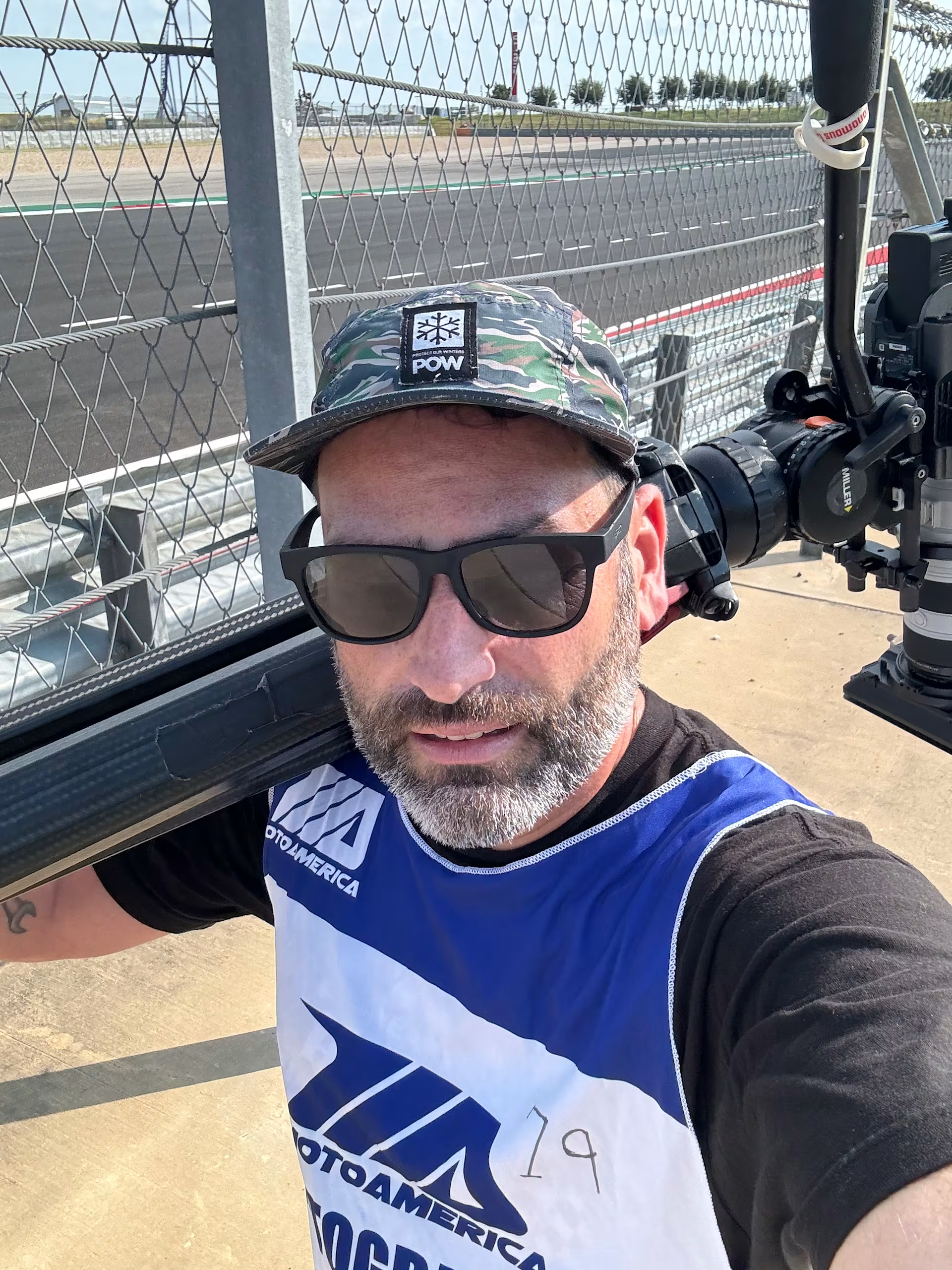
A lot of my favorite work is unrepeatable. A rider coming through a corner at King of the Baggers. A sunrise over San Francisco that lasts ninety seconds. You can’t prompt your way to those. You have to be standing in the right place with the right lens, having guessed correctly about where the thing was going to happen. AI can help me plan and it can help me edit, but it cannot be there for me. Being there is the whole job.
When "good enough" quietly becomes the ceiling
The real risk I watch for isn’t a fake-looking shot. It’s the slow slide toward "that’ll do." AI is very good at getting you to 80 percent fast, and 80 percent is exactly where a lot of work stops being memorable. The last 20 percent — the specific framing, the cut that lands a beat early, the grade that feels like a time of day rather than a preset — is where the craft lives. That part is still stubbornly human, and I want to keep it that way.
How I actually think about it
My rule of thumb is simple. I let AI help with the work around the work: organizing, transcribing, drafting, speeding up the tedious parts so I have more attention for the parts that matter. I don’t let it make the decisions that are the reason someone hired a person instead of a stock library. The judgment, the taste, the presence in the room — that’s not the overhead of filmmaking. That is the filmmaking.
If you’re looking for someone to tell your story who knows when to reach for the new tools and when to put them down, that’s the kind of work I do. I run The Bureau Media, a San Jose-based video production company working with brands, agencies, and teams across Silicon Valley and the San Francisco Bay Area on documentary, commercial, and branded video.
The Bureau Media
San Jose | San Francisco | Silicon Valley